
Assay Interferences are a common problem in the laboratory, creating a disconnect between the test result and the clinical reality. This forces the lab to investigate, to handle samples as exceptions, which interrupts the workflow and creates a delay in the test result.
Impact for the patient
Up to 5% of clinical laboratory test results are potentially affected as a result of the common interferences.*
Assay design plays a critical role in enabling the correct diagnosis and corresponding treatment path. VITROS™ Solutions offer safety technologies to minimize these problems, increasing efficiency and quality of laboratory test results as well as turnaround time (TAT), which is crucially important for critically ill patients.
Learn here how this is being addressed for five common challenges:
- 1. Electrolyte exclusion effect
- 2. Hemolysis, Icterus, Lipemia
- 3. Paraproteins
- 4. Water impurities
- 5. Carryover and bubble & clot errors
How to assure the right result for electrolytes also at abnormal levels of proteins/lipids.
The challenge
Electrolyte exclusion effect with indirect ISE
With indirect ISE, samples are diluted. Samples with increased fraction of solid phase result in a more diluted liquid phase and the concentration of electrolyte is underestimated.
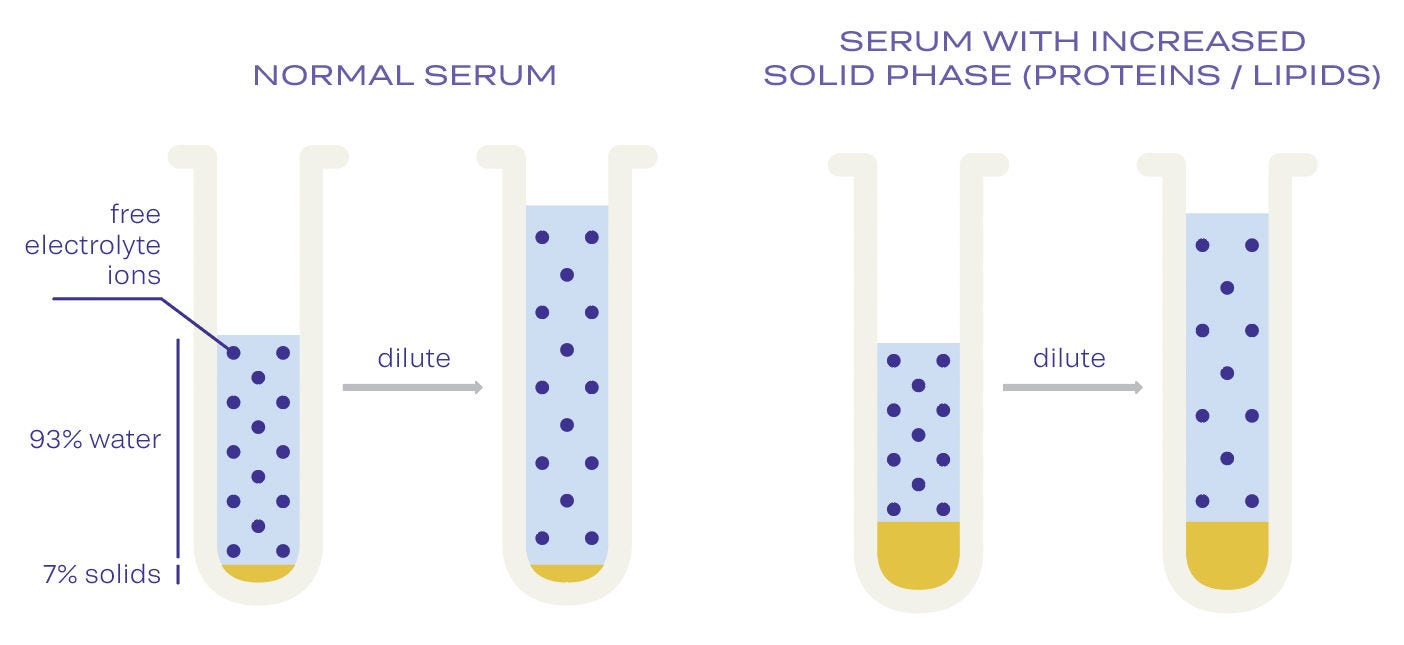
Potential misclassification leading to incorrect patient management of critical care patients.
The VITROS™ Solution
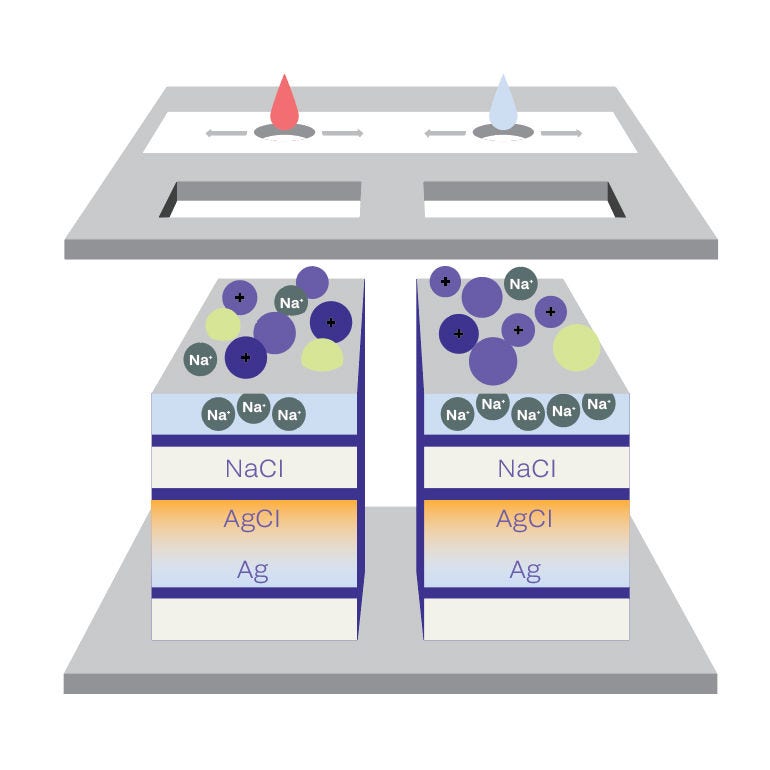
VITROS™ MicroSlides for NA, K+, CL-
- Single-use DIRECT ion-specific electrode (ISE)
- No dilution of the sample
- No electrolyte exclusion effect
Other advantages:
- One set of electrodes per test
- No electrode maintenance

How to avoid falsely reported results due to Hemolysis, Icterus or Lipemia (HIL).
The challenge
HIL is a common challenge and can contribute to poor laboratory results
% OF SAMPLES WITH HIL
(average based on multiple references*)
6%
Hemolysis
7.6%
Icterus
7.4%
Lipemia
The VITROS™ Solution
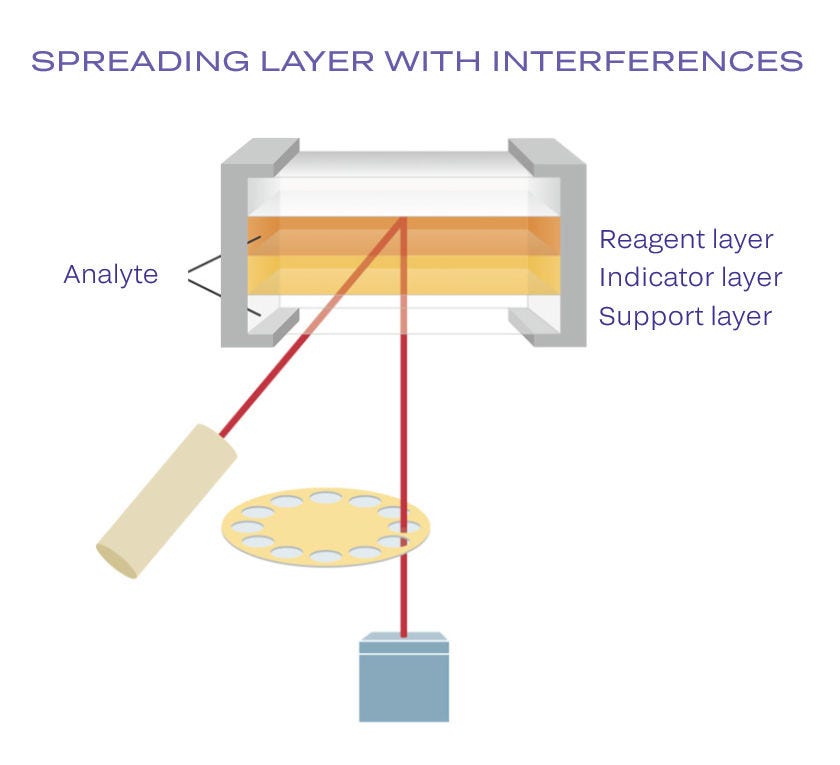
VITROS™ MicroSlide
Spreading layer filters out the potentially interfering hemoglobine, bilirubines or lipids for chemistry assays.
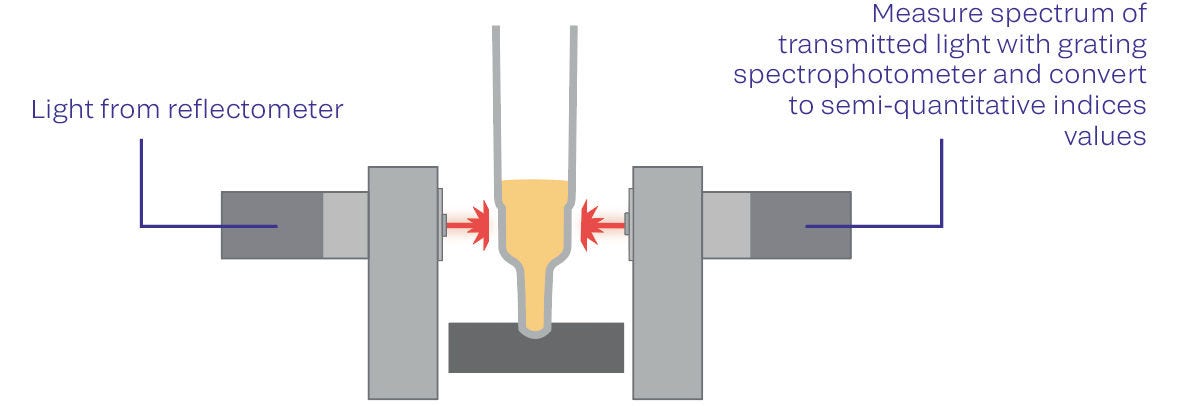
VITROS™ MicroSensor Technology
Flags results in case of endogenous interferences for homo- and heterogenous immunoassays with:
- No additional sample, reagent or consumable
- No impact on TAT
How to treat falsely elevated or decreased results on a variety of assays due to paraproteins.
The challenge
Paraproteinemia occurs in a variety of conditions, including multiple myeloma, Waldenström’s macroglobulinaemia, plasmacytoma, amyloidosis and monoclonal gammopathy of undetermined significance (MGUS).
The overall prevalence of paraproteinemia has not been rigorously studied; however, the prevalence of MGUS, the most common cause of paraproteinemia, is approximately 3-4% in individuals > 50 years old and 6-8% for those individuals >80 years old. 1
Paraproteins present in serum can interfere in a variety of ways with a number of laboratory assays, leading to a range of incorrect laboratory results.
The VITROS™ Solution
VITROS™ MicroSlide Spreading layer filters out the potentially interfering proteins
How to avoid erroneous results due to bad water quality.
The challenge
Many impurities can be present in water, which may interfere with testing and lead to inaccurate results.2
The table below provides an overview of the different contaminants that can impact laboratory applications.3
| Ions | Organics | Bacteria | Bacteria | Particles | Silica |
General chemistry | x |
| x |
|
|
|
Enzymes | x | x | x |
|
| x |
Toxicology TDM | x | x | x |
|
|
|
EIA | x | x | x | x |
|
|
Trace elements | x | x | x | x |
|
|
Molecular testing | x | x | x | x |
|
|
Diagnostic instruments | x | x | x | x | x | x |
The VITROS™ Solution
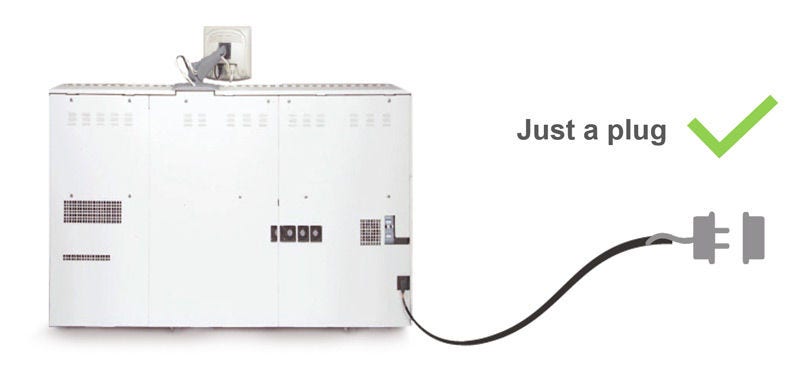
VITROS™ dry chemistry uses no water
- No effluent to sample, test, treat or discard
- No plumbing
- No drains
How to avoid errors due to bubbles & clots and carryover.
The challenge
Carryover may happen due to the use of the probes for samples and reagents.
Bubbles and clots may be undetected and create errors.
The VITROS™ Solution
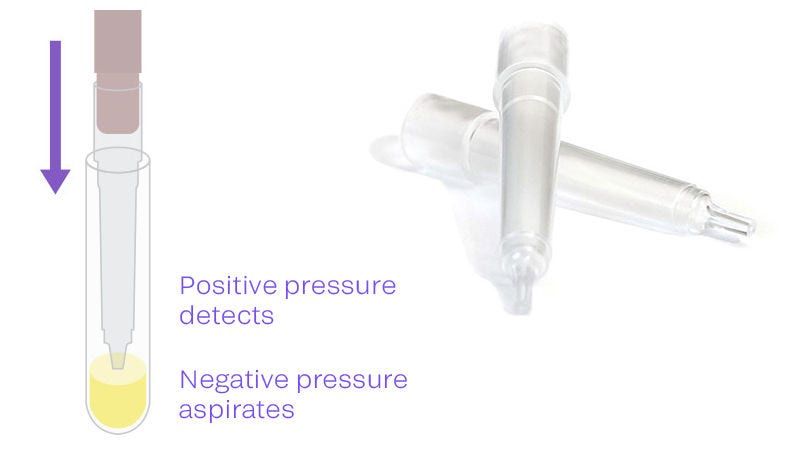
VITROS™ SMART Metering accurately dispenses samples and avoids carryover due to disposable tips:
Patented pressure level-sensing technology for bubble and clot detection.
References
- Wadhera RK, Rajkumar SV. Prevalence of monoclonal gammopathy of undetermined significance: a systematic review. Mayo Clin Proc. 2010;85(10):933-942. doi:10.4065/mcp.2010.0337
- Nabulsi R, Al-Abbadi MA. Review of the impact of water quality on reliable laboratory testing and correlation with purification techniques. Lab Med. 2014;45(4):e159-e165. doi:10.1309/LMLXND0WNRJJ6U7X
- EMD Millipore Corporation. Lit. No. PB1742ENUS. Billerica, MA: EMD Millipore Corp; 2012.
* Data on file PR-05255.



